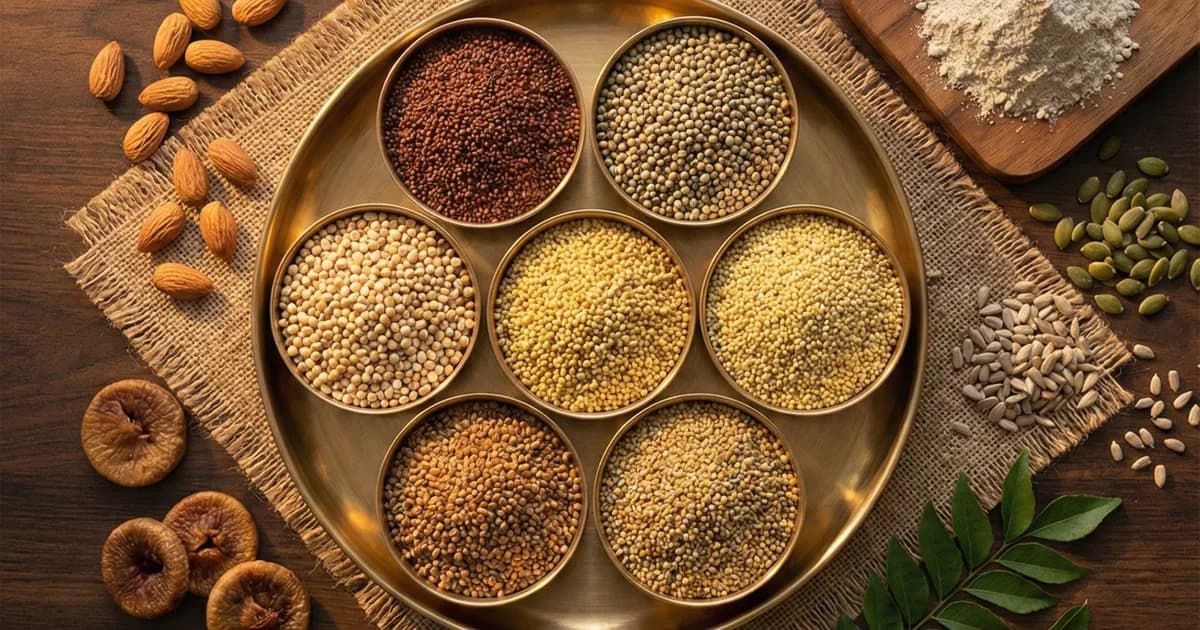
Ragi Cookies: Why Finger Millet Deserves a Place in Your Snack Jar
Ragi (finger millet) brings naturally occurring calcium, iron, and fiber to the humble cookie. Here is what actually makes a ragi cookie different - and how Milletan bakes Ragi Cacao without maida or refined sugar.
What are ragi cookies and how are they different from regular cookies?
Ragi cookies are baked with finger millet (ragi) flour instead of refined wheat flour. Ragi is one of India's oldest cultivated grains, and it stands out among cereals for its naturally high calcium content - around 344mg per 100g of whole grain, the highest of any common cereal - along with meaningful iron and dietary fiber. A well-made ragi cookie carries that whole-grain profile into a snack format. In Milletan's Ancient Bake Collection, Ragi Cacao leads with ragi flour, balanced with chocolate chips, sweetened with jaggery instead of refined sugar, and baked with real butter. There is no maida and no refined sugar in the Ancient Bake recipes - which is exactly the point: the grain does the work, not filler flour.
Key topics: ragi cookie ingredients, finger millet snack, whole grain cookie
Why does ragi make sense as a cookie base?
Most cookies are built on maida - refined wheat flour with the bran and germ stripped away. Ragi flour keeps the whole grain intact, so its fiber and mineral content ride along into whatever you bake with it. Ragi also has a naturally earthy, malty flavour that pairs unusually well with cocoa and jaggery, which is why the Ragi Cacao recipe leads with those three ingredients. This is not a health tablet dressed up as a biscuit; it is a genuinely good chocolate cookie that happens to be made from a genuinely good grain.
Key Benefits
- Ragi is naturally rich in calcium - the highest among common cereals - which may support everyday bone health as part of a balanced diet
- Whole ragi contributes dietary fiber, which may support satiety between meals
- Ragi carries naturally occurring iron, a nutrient many Indian diets run short on
- Its earthy, malty flavour deepens cocoa rather than hiding behind it
- Ancient Bake ragi cookies contain no maida and no refined sugar - jaggery provides the sweetness
How to read a ragi cookie label before you buy
- 1Check where ragi sits in the list
Many 'ragi' biscuits list ragi far down the ingredient list behind maida. Look for it in first position - Milletan's Ragi Cacao declares ragi (finger millet) flour as its first ingredient.
- 2Look for what replaces maida
If maida (refined wheat flour) still appears, the cookie is mostly refined flour with a sprinkle of millet. Ancient Bake recipes use ragi flour with gram flour, and no maida at all.
- 3Check the sweetener
Refined sugar is the default in commercial biscuits. Jaggery-sweetened cookies keep a rounder, less sharp sweetness and skip refined sugar entirely.
- 4Scan for artificial colours and preservatives
A cocoa cookie should get its colour from cocoa. Milletan bakes in small batches in Surat with no artificial colours or preservatives.
Whole grain comparison: ragi vs refined wheat flour (per 100g, approximate)
| Nutrient | Ragi (whole) | Maida (refined wheat) |
|---|---|---|
| Calcium | ~344 mg | ~20 mg |
| Iron | ~3.9 mg | ~1.2 mg |
| Dietary fiber | ~7.3 g | ~0.5 g |
| Grain state | Whole grain | Bran and germ removed |
Explore more from Milletan
Frequently Asked Questions
Quick answers to common questions about this topic
As part of a balanced diet, yes - a couple of ragi cookies with tea or milk is a more whole-grain-forward choice than a maida biscuit. They are still cookies, so enjoy them as a snack, not a meal replacement.
Milletan's Ragi Cacao tastes like a rich, earthy chocolate cookie. Ragi's malty depth actually complements cocoa, and chocolate chips add familiar sweetness - most people would not guess it contains no maida.
No. The Ancient Bake Collection, which includes Ragi Cacao, is sweetened with jaggery. There is no refined sugar and no maida in Ancient Bake recipes.
Whole finger millet contains roughly 344mg of calcium per 100g - the highest among common cereals. A cookie delivers a proportionate amount based on its ragi content; it is a helpful contribution, not a supplement.
Ragi has been a traditional first grain in Indian households for generations. Ragi cookies made without maida, refined sugar, or artificial colours are a sensible tiffin-box option for most children.
Milletan Editorial Team
Verified BrandPublished by Milletan.
Related Articles
Continue exploring millet nutrition and healthy living
 Nutrition Science
Millet Cookies vs Regular Biscuits: An Honest Side-by-Side
Millet cookies against the mass-market pack: flour, sweetener, fat, fibre and flavour compared honestly,…
Read more Cooking & Recipes
Jowar and Bajra in Baking: How Ancient Grains Behave in the Oven
Jowar bajra baking, decoded: sorghum bakes light and nutty, pearl millet dense and warm.
Read more Healthy Living
The No-Maida Snack Shelf: Rethinking What Lives in Your Cookie Jar
No maida is rarer than the label suggests.
Read moreTry Milletan's Millet Snacks
Love millets? Skip the kitchen and grab our ready-made cookies - baked in small batches, with no preservatives and no artificial colours.